

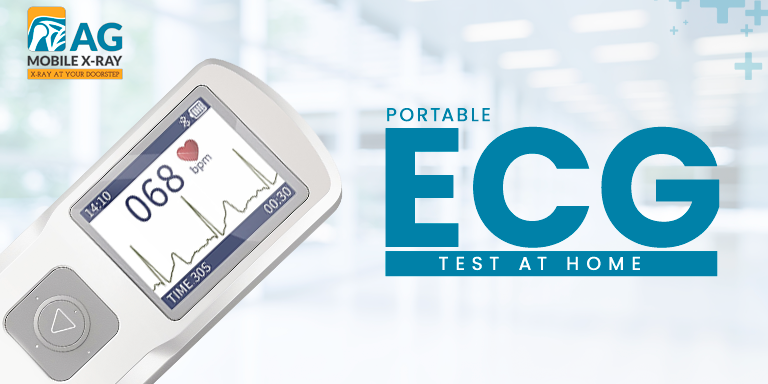
Managing chronic heart conditions requires consistent monitoring and timely intervention. With advancements in healthcare technology, using a portable ECG test at home has become an effective solution for monitoring cardiac health regularly. Below is a detailed breakdown of how this tool helps in managing chronic heart conditions.
1. What is an ECG, and why is it Important?
- An ECG (electrocardiogram) measures the heart’s electrical activity.
- It helps detect:
- Irregular heart rhythms (arrhythmias)
- Blocked or narrowed arteries
- Heart attacks
- Structural abnormalities
- Effects of medications on the heart
- Irregular heart rhythms (arrhythmias)
- It is essential for diagnosing and monitoring heart diseases over time.
2. What is a Portable ECG Test at Home?
- A portable ECG test at home is a compact, user-friendly device used to monitor heart activity outside a clinical setting.
- It is designed for personal use and usually connects with a smartphone or tablet.
- The device records ECG readings in real-time, especially during symptoms.
- It enables patients to conduct ECGs at their convenience, without hospital visits.
3. Key Benefits of a Portable ECG Test at Home
a. Convenience
- Enables ECG testing at home without traveling to a hospital or clinic.
- Especially helpful for elderly patients and those with mobility issues.
b. Early Detection
- Captures heart data at the time symptoms like palpitations, chest discomfort, or dizziness occur.
- Helps identify irregular heart rhythms or other issues early.
c. Continuous Monitoring
- Most devices store historical data for long-term trend analysis.
- Assists doctors in tracking changes and adjusting treatment.
d. Reduces Emergency Risks
- Allows timely decision-making in case of abnormal readings.
- Encourages preventive care by identifying issues before they escalate.
e. Patient Empowerment
- Promotes awareness and involvement in one’s heart health.
- Helps patients understand their condition and be more proactive.
4. Who Can Benefit from Portable ECG Testing at Home?
a. Patients with Atrial Fibrillation (AFib)
- AFib often comes and goes; home monitoring helps capture irregular episodes.
b. People with Heart Failure
- Regular ECG readings help assess cardiac stress and avoid hospital admissions.
c. Individuals Recovering from Heart Attacks
- At-home monitoring aids recovery and ensures the heart is healing properly.
d. People with High Blood Pressure or Diabetes
- These conditions increase the risk of heart complications.
- Early ECG changes can signal worsening heart health.
e. Those with a Family History of Heart Disease
- Preventive monitoring can help detect signs early and avoid future problems.
5. How to Use a Portable ECG Test at Home
Step-by-step guide:
- Prepare the device
- Charge it and connect it to its app if needed.
- Charge it and connect it to its app if needed.
- Position yourself
- Sit calmly in a quiet place.
- Sit calmly in a quiet place.
- Place the device
- Follow instructions (fingertips, chest, or wrist, depending on the device).
- Follow instructions (fingertips, chest, or wrist, depending on the device).
- Record the reading
- Press start or follow the app prompt. Most readings take 30–60 seconds.
- Press start or follow the app prompt. Most readings take 30–60 seconds.
- Review the results
- Waveforms and heart rate will be displayed instantly.
- Waveforms and heart rate will be displayed instantly.
- Share with your doctor
- Forward the results via email, app, or during follow-up visits.
- Forward the results via email, app, or during follow-up visits.
6. What to Look for in a Portable ECG Device
When choosing a portable ECG test at home, consider the following features:
- Clinical-grade accuracy and medical certification
- Easy-to-use interface for all age groups
- Long battery life and fast charging
- Real-time display and waveform visibility
- Compatibility with smartphones or tablets
- Data storage for multiple readings
- Option to export or share reports with doctors
- Alerts or interpretations for irregular readings
7. Limitations of a Portable ECG Test at Home
While beneficial, these devices have certain limitations:
- Not a replacement for clinical tests
- Most devices offer single-lead ECGs, while hospitals use 12-lead systems for detailed views.
- Most devices offer single-lead ECGs, while hospitals use 12-lead systems for detailed views.
- Requires proper use
- Incorrect positioning or movement can lead to inaccurate results.
- Incorrect positioning or movement can lead to inaccurate results.
- Not for emergencies
- Severe symptoms should always be treated at a hospital, even if the device shows normal readings.
- Severe symptoms should always be treated at a hospital, even if the device shows normal readings.
- Interpretation required
- Doctors should review the results for accurate diagnosis and advice.
- Doctors should review the results for accurate diagnosis and advice.
8. How Home ECG Monitoring is Changing Cardiac Care
The adoption of portable ECG tests at home is reshaping how chronic heart diseases are managed:
- Patients are becoming more active in tracking and managing their health.
- Doctors can receive real-time data and adjust treatments faster.
- Hospital visits are reduced, saving time and healthcare costs.
- Preventive care becomes more effective with continuous monitoring.
- Rural and underserved populations gain better access to heart monitoring tools.
9. Summary of Advantages in Point Form
- Easy to use and convenient
- Detects problems as they happen
- Encourages consistent monitoring
- Enables early medical intervention
- Enhances patient–doctor communication
- Cost-effective for long-term care
Conclusion
Living with a chronic heart condition demands regular and reliable health monitoring. A portable ECG test at home provides an efficient and user-friendly solution for patients and caregivers. It supports early detection of irregularities, offers continuous tracking, and enables faster decision-making by healthcare professionals.
While it should not replace clinical diagnosis or emergency services, it plays a vital role in ongoing heart health management. With proper use, this simple device can help patients stay on top of their heart condition, avoid complications, and live with greater peace of mind.
If you or someone you know is managing a long-term heart issue, consider incorporating a portable ECG device into your daily health routine. It could be one of the most important tools in achieving better cardiac outcomes and leading a healthier life.