

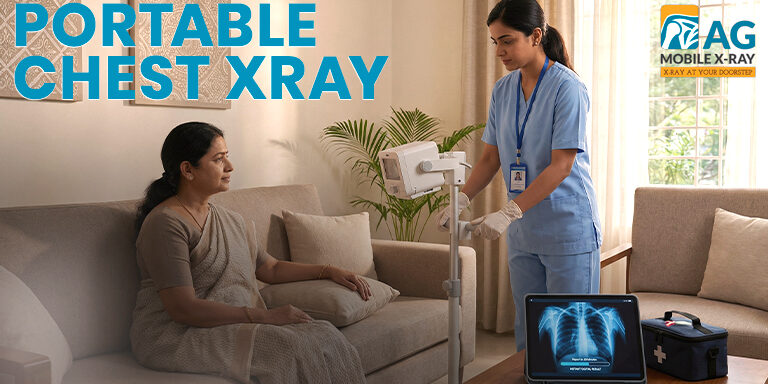
Not every patient can easily travel to a hospital or diagnostic centre for imaging. For someone recovering from surgery, managing a chronic respiratory condition, or receiving medical care at home, even a short journey can be physically demanding. As healthcare continues to move towards more patient-focused solutions, portable chest X-ray services have become an important way to deliver timely diagnostic imaging without unnecessary travel.
A chest X-ray is one of the most commonly requested imaging investigations because it provides valuable information about the lungs, heart, and surrounding structures. Advances in portable digital imaging technology now make it possible to perform this examination safely in a patient’s home, nursing facility, rehabilitation centre, or other care setting.
Why Chest Imaging Remains One of the Most Requested Diagnostic Tests
Chest imaging plays an important role in diagnosing and monitoring a wide range of medical conditions. Physicians often recommend repeat imaging to evaluate recovery, assess treatment progress, or investigate new symptoms.
For many patients, the need for imaging is part of an ongoing treatment plan rather than an emergency. When travelling is difficult, delaying the scan can postpone important clinical decisions. A portable chest X-ray helps ensure that necessary imaging can be completed without disrupting the patient’s recovery.
Supporting Patients During Recovery
Recovery often requires regular medical monitoring. Patients recovering from respiratory illnesses, chest surgery, or prolonged hospital stays may require follow-up imaging to help doctors understand how treatment is progressing.
Travelling while recovering can be tiring and uncomfortable. Home-based chest imaging allows patients to remain in a familiar environment while still receiving the diagnostic support their healthcare provider needs.
This approach reduces physical strain and allows recovery to continue with fewer interruptions.
Improving Care for Elderly Patients
Older adults frequently experience mobility challenges that make hospital visits more difficult. Climbing stairs, waiting in crowded facilities, or travelling long distances may not always be practical.
A portable chest X-ray allows elderly patients to undergo routine imaging where they are most comfortable. This supports regular health monitoring while reducing the stress associated with transportation and extended waiting times.
Families and caregivers also benefit by avoiding the logistical challenges involved in organising hospital visits.
An Important Tool for Home Healthcare
Home healthcare has expanded significantly in recent years. Many patients now receive nursing care, physiotherapy, medication management, and medical consultations at home.
Diagnostic imaging is becoming an essential part of this model. A portable chest X-ray enables healthcare professionals to complete an important investigation without interrupting the patient’s care plan.
By integrating imaging into home healthcare, treatment decisions can often be made more efficiently, helping doctors respond quickly when changes are identified.
Faster Access to Diagnostic Information
Digital imaging has transformed the speed at which diagnostic information becomes available.
Portable imaging systems capture high-quality digital images that can be securely reviewed by radiologists. Electronic reporting supports faster communication between healthcare professionals, allowing referring doctors to receive the information they need for clinical decision-making.
This efficient workflow helps reduce unnecessary delays and supports better continuity of care.
Reducing the Burden on Patients and Caregivers
Healthcare appointments often affect more than just the patient. Family members and caregivers may need to arrange transportation, take time away from work, and assist throughout the visit.
When imaging is performed at home, much of this burden is reduced. Patients avoid long journeys, while caregivers can focus more on supporting recovery rather than coordinating travel.
For families managing long-term medical conditions, this convenience can make a meaningful difference in day-to-day care.
When Doctors May Recommend a Portable Chest X-Ray
Healthcare professionals may consider home-based chest imaging in situations such as:
- Follow-up monitoring after treatment
- Recovery from chest or lung-related illnesses
- Patients receiving home nursing care
- Elderly individuals with limited mobility
- Bedridden patients
- Rehabilitation following major illness or surgery
- Patients for whom travel may delay or complicate care
The decision is always based on the patient’s medical condition and the treating doctor’s clinical judgement.
The Growing Role of Portable Imaging in Modern Healthcare
Healthcare is increasingly focused on making services more accessible without compromising quality. Portable diagnostic technologies are helping bridge the gap between hospitals and home care by providing essential medical investigations where patients need them most.
As digital healthcare continues to evolve, services such as portable chest X-ray examinations will play an increasingly important role in improving patient access, supporting early diagnosis, and enabling ongoing monitoring outside traditional healthcare settings.
Conclusion
Modern healthcare is no longer defined only by where treatment takes place but by how easily patients can access the care they need. A portable chest X-ray offers a practical solution for individuals who require timely chest imaging while recovering at home or managing conditions that make travel difficult.
By combining digital imaging technology with patient-centred care, portable chest X-ray services help improve convenience, support clinical decision-making, and make routine diagnostic imaging more accessible. As home healthcare continues to grow, portable imaging will remain an essential part of delivering efficient and compassionate medical care.